Blog · The Framework
The orthopedist looked at structure. The neurologist examined nerves. The PT addressed movement. You still hurt. Here's why — and what integration actually looks like.
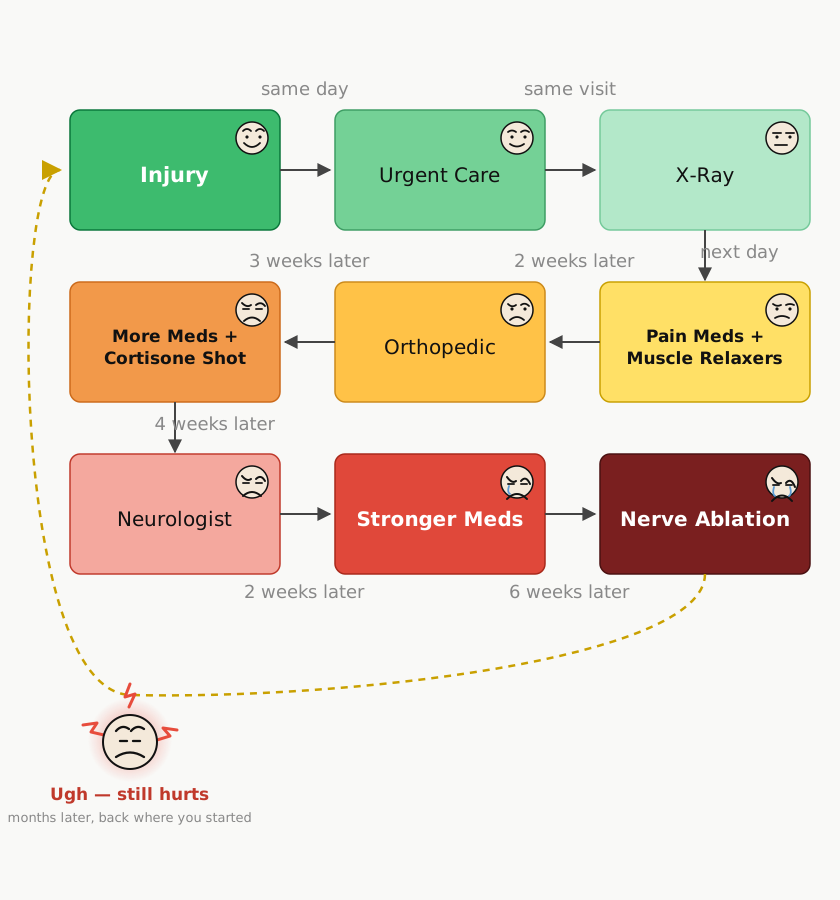
You've seen specialists. The orthopedist looked at structure. The neurologist examined nerves. The physical therapist addressed movement. The pain management doctor prescribed medication. Each expert viewed you through their specialized lens — and each found something to treat within their domain.
Yet you remain in pain.
Every stop on that loop treats the same symptom a different way. None of them ask why it keeps coming back. An intro appointment does — before the next referral, the next prescription, the next procedure.
Book Your Intro Appointment Ask the Organic MechanicThis is the predictable outcome of fragmented care. Modern medicine excels at isolating variables, but your body doesn't operate in isolation. Pain emerges from a system that has lost coherence — and restoring coherence requires integration, not further fragmentation.
The Organic Mechanic Framework offers a different approach: a systems-based method that addresses structure, signal, energy, and behavior simultaneously.
We look at four things at once:
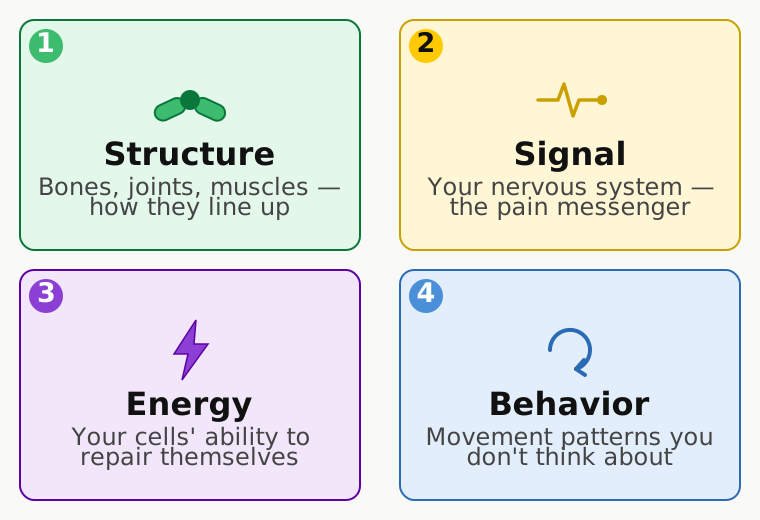
1. Structure — Your bones, joints, and muscles, and how they're lined up. When one part shifts out of place, force piles up somewhere it shouldn't — and that's usually where it hurts.
2. Signal — Your nervous system. Pain is a message it sends when it thinks something's wrong. Long after an injury heals, it can keep sending that message anyway — out of habit.
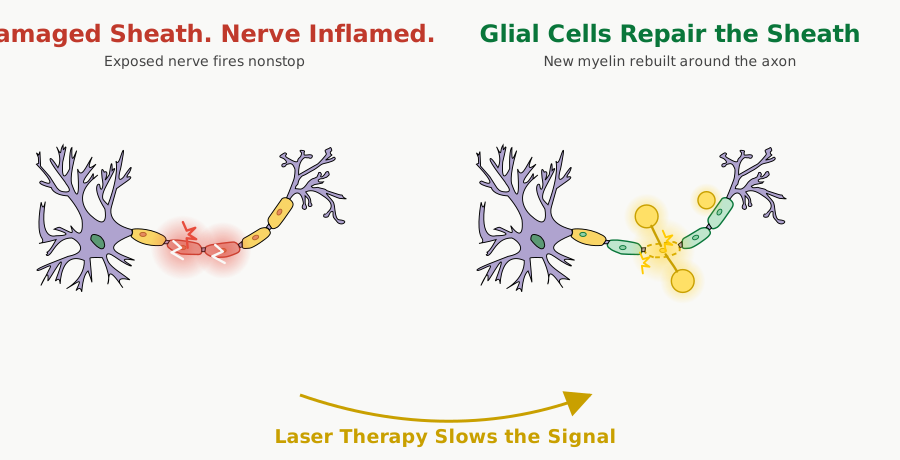
A nerve with a damaged sheath doesn't need a stronger drug — it needs the inflammation calmed down so glial cells can get in and rebuild it.
Neuron illustration adapted from Dhp1080 / Wikimedia Commons, CC BY-SA 3.0.
That's exactly what a session does — no guessing, no waiting weeks for the next referral.
Book a $75 Session Ask the Organic Mechanic3. Energy — Your cells' ability to repair themselves. When that's running low, healing stalls and pain lingers longer than it should.
4. Behavior — The way you move and hold yourself without thinking about it. Bad patterns stick around because they're easy, not because they're right.
These four aren't separate problems. They're one system — your body — and they all affect each other.
Here's the idea behind all of it: pain means something in that system lost its balance. Fix the balance, and the pain has no reason to stick around.
So instead of just treating where it hurts, we ask what's actually out of balance and where — then realign the joint, calm the overactive nerve, boost cell repair, and retrain the movement pattern, all at once instead of one at a time.
The goal isn't to keep you coming back. It's to fix what's actually wrong so you don't have to.
An assessment maps all four pillars at once — structure, signal, energy, and behavior — instead of treating one isolated finding.
Book a $75 Session See Membership & Packages Ask the Organic Mechanic